
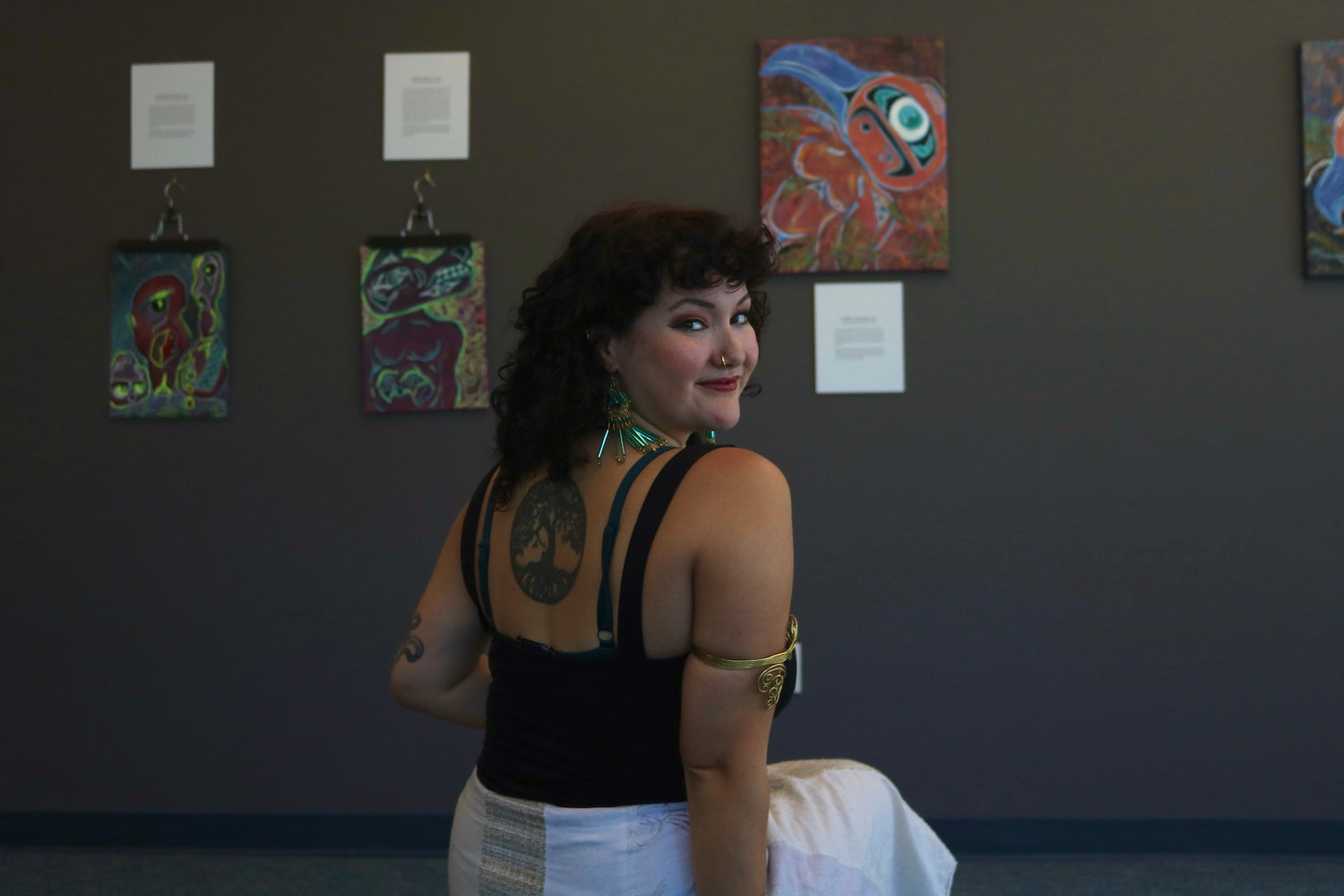
Introductions
Lajah Warren is a Songhees artist and the Founder of Nova Arts Hub, focusing much of her professional life on exploring the intersections between art, community empowerment, and social services. She is of mixed Indigenous and settler heritage, focusing her art practice in painting and participatory, process-based art. Lajah draws from traditional Coast Salish design alongside expressive acrylic techniques. Her work has taken many forms, including local and international exhibitions, public art, murals, workshops, commissions, and participatory projects. Across these formats, she creates opportunities for people to encounter art as an active space for reflection and dialogue.
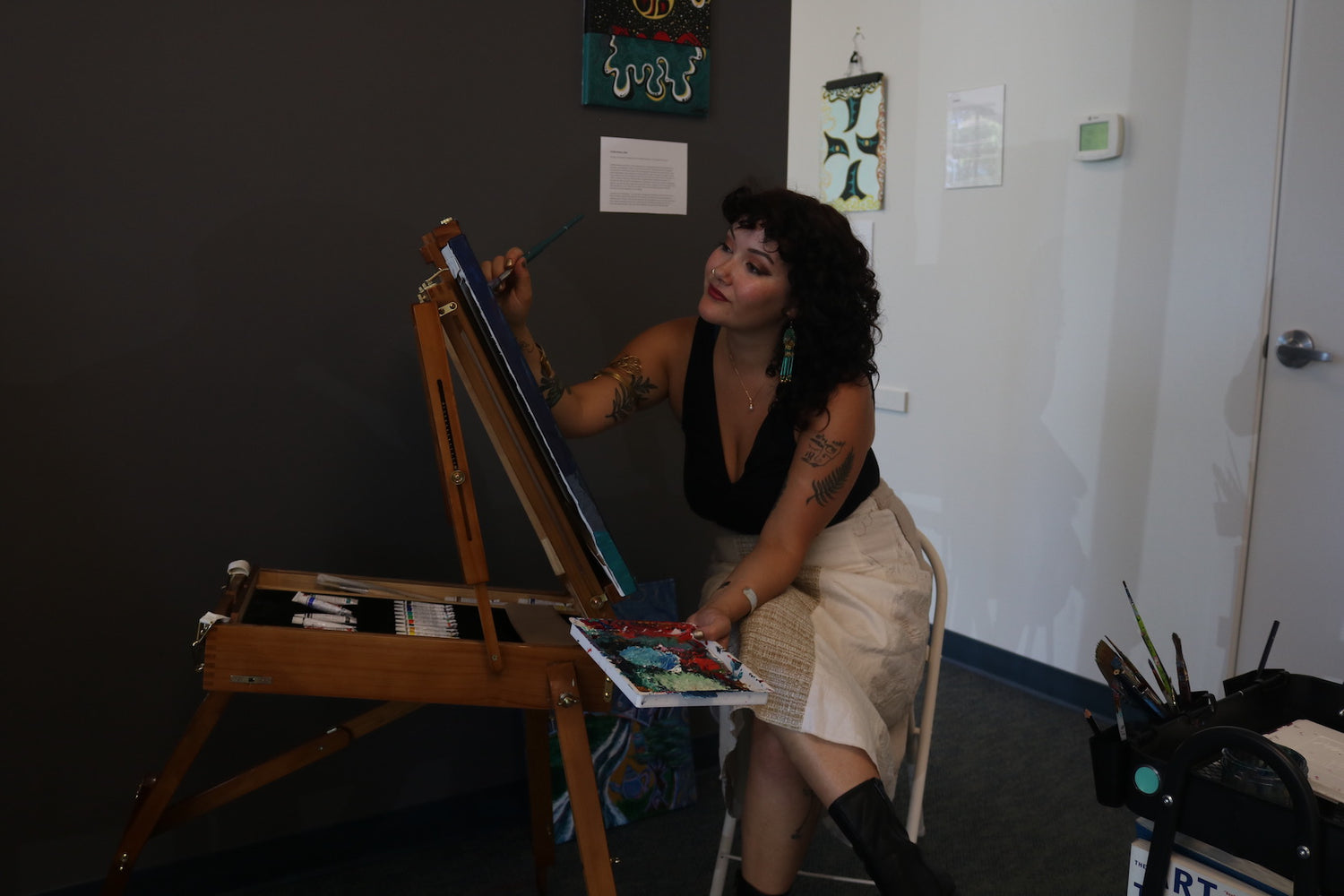
Art as Dialogue
Her background in social services and community-based practice deeply informs her approach. Her practice therefore moves between making and facilitating, in an attempt to create conditions for others to use creativity as a way of understanding their own experiences and the world around them. She has been recognized for her work as a recipient of the BC Multiculturalism and Anti-Racism Annual Award and the Witness Legacy Award for Social Purpose and Responsibility through Art at the Greater Victoria Regional Arts Award.
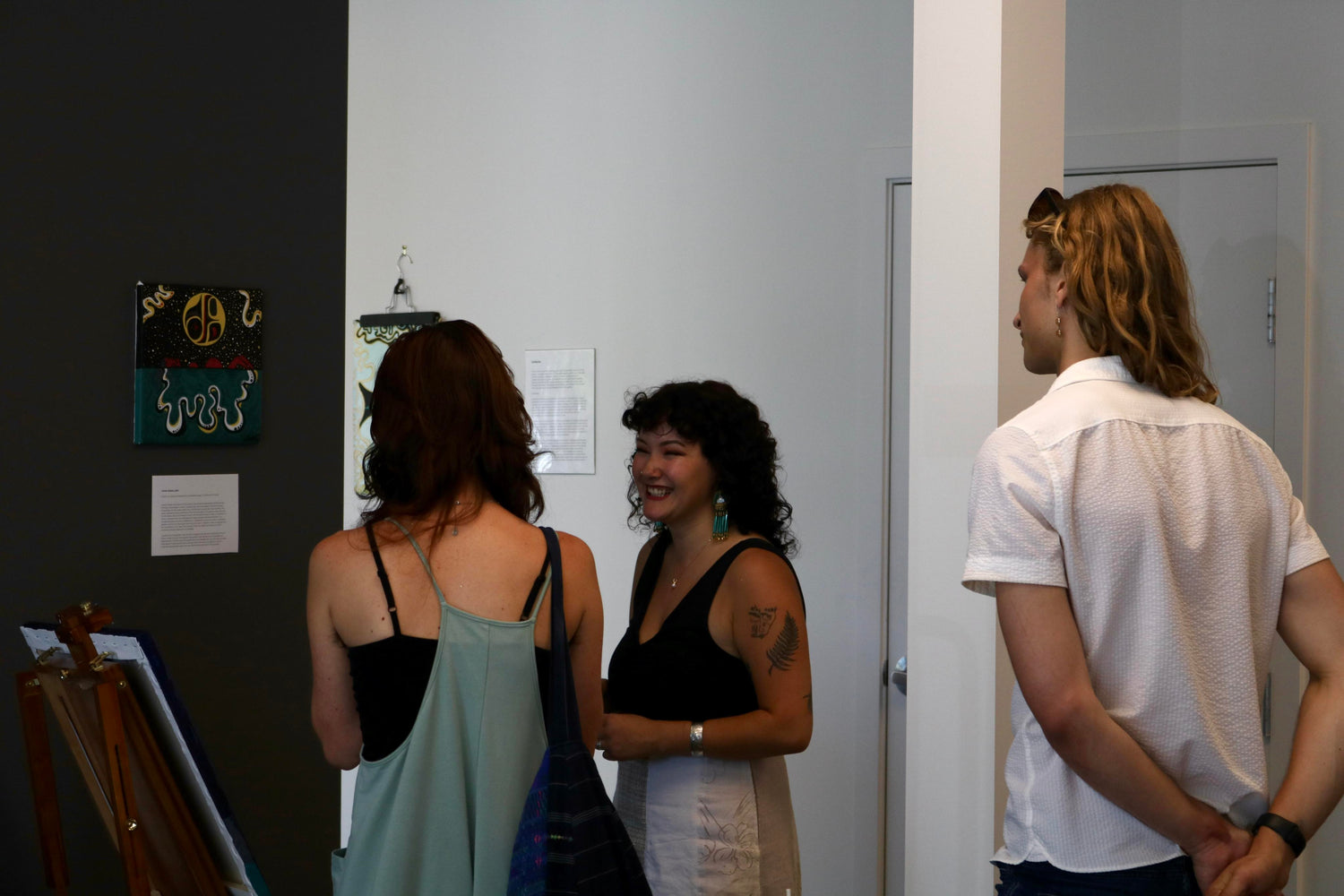
Art as Resistance
This same philosophy extends into Lajah’s work as the founder of Nova Arts Hub, a space for community members to explore art as a tool for wellness, cross-cultural connections, and community empowerment. Nova Arts Hub addresses the lack of accessible, culturally grounded, community-centred spaces where people can use art not only to create, but to process experiences, build relationships, and engage with social issues. Through this process, she sees art and community as mutually shaping forces: art drives community, and community drives the artwork.Together, Lajah’s personal art practice and work through Nova Arts Hub reflect an ongoing exploration of what art can do. Not only as a form of creative expression, but as a practice of social transformation. As a Songhees artist, Lajah sees her practice as part of a broader assertion that Indigenous art and ways of being is contemporary, evolving, and capable of challenging the systems that have historically sought to limit Indigenous people’s ability to take up space.